
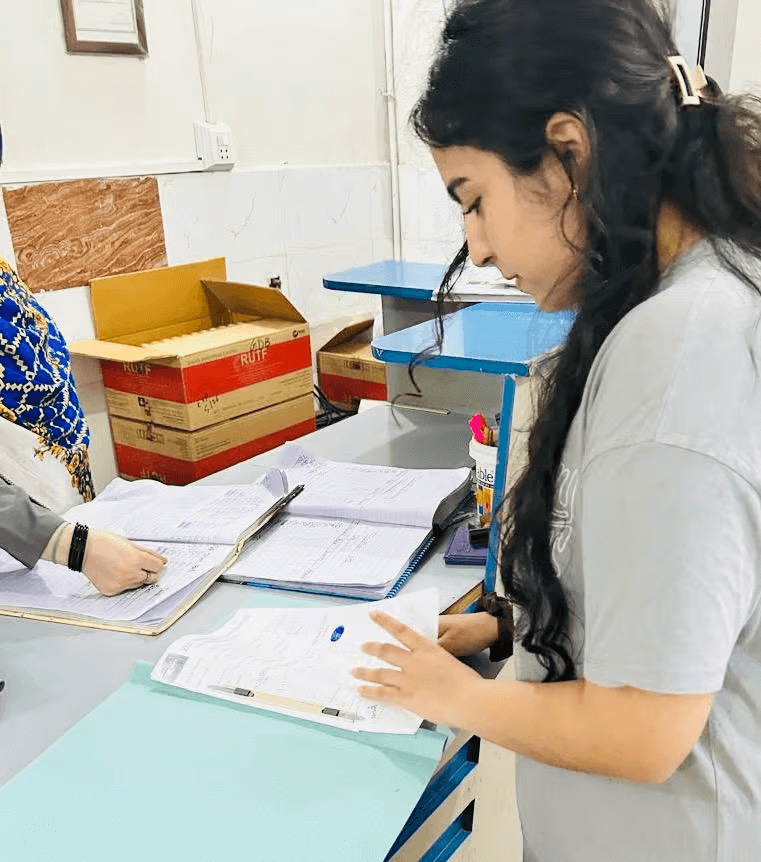
Inaya Fawad, a Year 13 student in Dubai and a Canadian Pakistani, is redefining what it means to be a young scientist in the modern world. Her purpose and scientific insight know no borders. Through her work in food security, sustainable nutrition, and community empowerment, Inaya has emerged as a dynamic and visionary leader tackling malnutrition in Pakistan with both intellectual depth and humanitarian purpose.
Guided by a strong sense of global citizenship, she has transformed her passion for chemistry into a tool for sustainable development. Her involvement with the Taqatwar Pakistan initiative under Unity Foods combined data-driven research with direct community action—where she distributed food rations in underserved regions while documenting the lived realities of hunger. Her reflective piece, “The Unseen Strength of Taqatwar Pakistan,” published in Pakistan Today, highlights her ability to merge empathy with analysis, amplifying marginalised voices through both science and storytelling.
In the laboratory, Inaya’s work has been equally pioneering. She collaborated to enhance the nutritional profile of Chakki Atta, applying biochemical analysis to improve its fortification while maintaining affordability for low-income families. She also contributed to the development and distribution of Ready-to-Use Therapeutic Food (RUTF) for children suffering from stunted growth due to maternal malnutrition, thereby bridging the gap between laboratory research and life-saving interventions.
Her curiosity extends beyond nutrition; Inaya has also explored biofuels derived from agricultural waste, linking renewable energy research to broader questions of climate resilience and resource equity.
For her outstanding contributions, Inaya was nominated as a Youth Ambassador for Zero Hunger in Pakistan, recognising her as one of the region’s most promising young changemakers.
Inaya Fawad stands as a testament to how empathy and expertise, when united, can create meaningful global impact. Her work embodies the belief that the next generation of leaders will not only study the world’s problems—they will solve them.